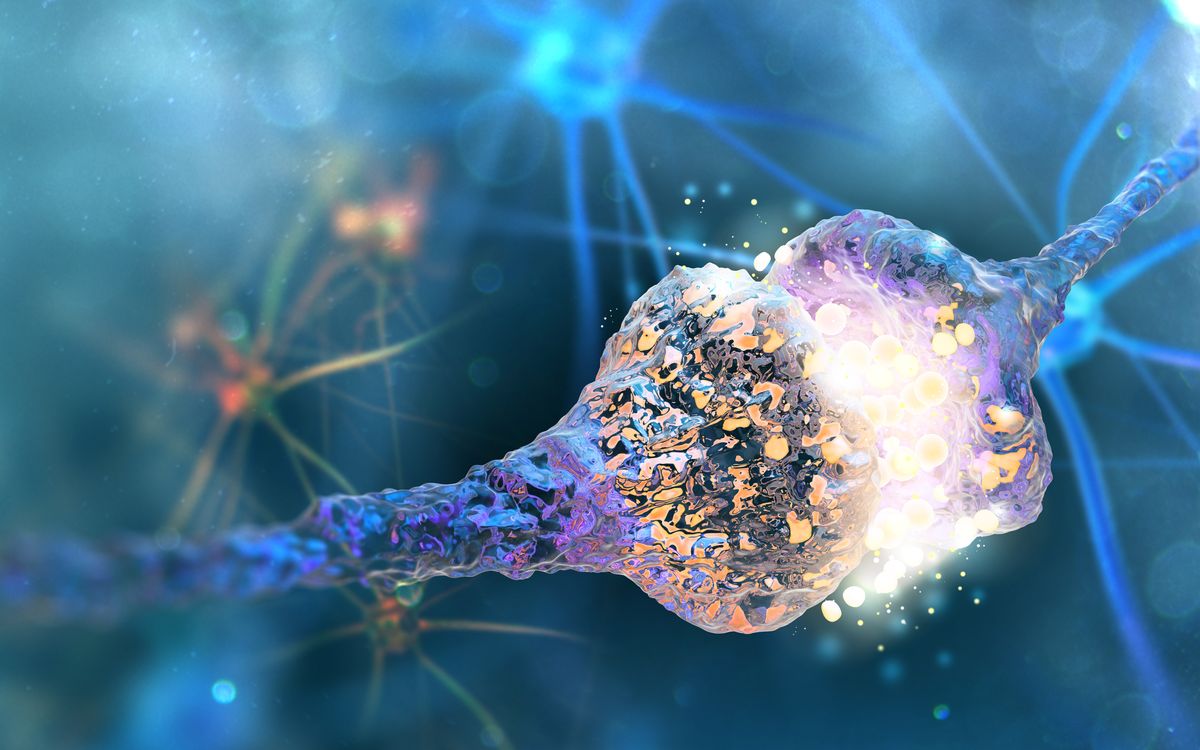
Neuroscientists face a serious obstacle in growing treatment to treat brain disorders — if the treatment work truly smartly on mice, they generally tumble short when folk are treated. Now, a brand new sign suggests a capability motive: Mind cells in mice activate genes that are very varied from these in human brain cells.
Mice and folk accept as true with evolutionarily conserved brains, which manner they accept as true with very identical brain architectures made up of identical kinds of brain cells. In principle, that makes mice ultimate test issues for neuroscientists, who don’t normally accept as true with the flexibility to sign into residing human brains.
Yet for mysterious causes, therapies that worked beautifully within the mouse brain normally don’t pan out when examined in folk.
Linked: 7 Strategies to Trick Your Mind
To resolve out why that can perhaps perhaps be, a crew of scientists from the Allen Institute for Mind science in Seattle analyzed brains donated from deceased folk and brain tissue donated by epilepsy sufferers after brain surgical operation. They namely checked out a portion of the brain called the medial temporal gyrus, which is taking into account language processing and deductive reasoning.
Researchers sorted by strategy of near to 16,000 cells from this brain blueprint and diagnosed 75 varied cell kinds. After they when compared the human cells with a data dwelling of mouse cells, they found that mice had counterparts that had been such as nearly all of these human brain cells.
But once they checked out which genes had been switched on or off inner these cells, they found stark differences between the mouse and human cells.
As an instance, serotonin is a neurotransmitter — or brain chemical — that regulates bustle for food, temper, memory and sleep. It does so by binding to brain cells by job of a receptor on the cell ground, which acts like a glove that is made to preserve a baseball.
But a mouse’s serotonin receptors are not found on the same cells that they are found in folk, the researchers found. So a drug that increases serotonin ranges within the brain, such as these at threat of treat despair, may per chance perhaps carry it to vastly varied cells in mice than in folk.
They furthermore found differences within the expression of genes that wait on construct connections between neurons. In essence, the cellular roadmap in our brains may per chance perhaps look at very varied from what it looks as if in a mouse.
“The bottom line is there are gargantuan similarities and differences between our brain and that of the mouse,” co-senior author Christof Koch, the executive scientist and president of the Allen Institute for Mind science, acknowledged in a narrate. “One in every of these tells us that there may per chance be gargantuan evolutionary continuity, and the varied tells us that we are abnormal.”
“While you get hold of to must medicine human brain illnesses, it is top to sign the distinctiveness of the human brain,” he added. The findings had been printed the day earlier than on the present time (Aug. 21) within the journal Nature.
- 5 Strategies Obesity Affects the Mind
- 7 Strategies the Thoughts and Body Alternate With Age
- 6 Big Mysteries of Alzheimer’s Disease
Before all the pieces printed on Are residing science.



Leave a comment
Sign in to post your comment or sign-up if you don't have any account.