
Immense, schmancy compounds withhold doping up throughout the order voltaic system, and new compare might well perhaps also merit certain up confusion about how they produce in so many locations.
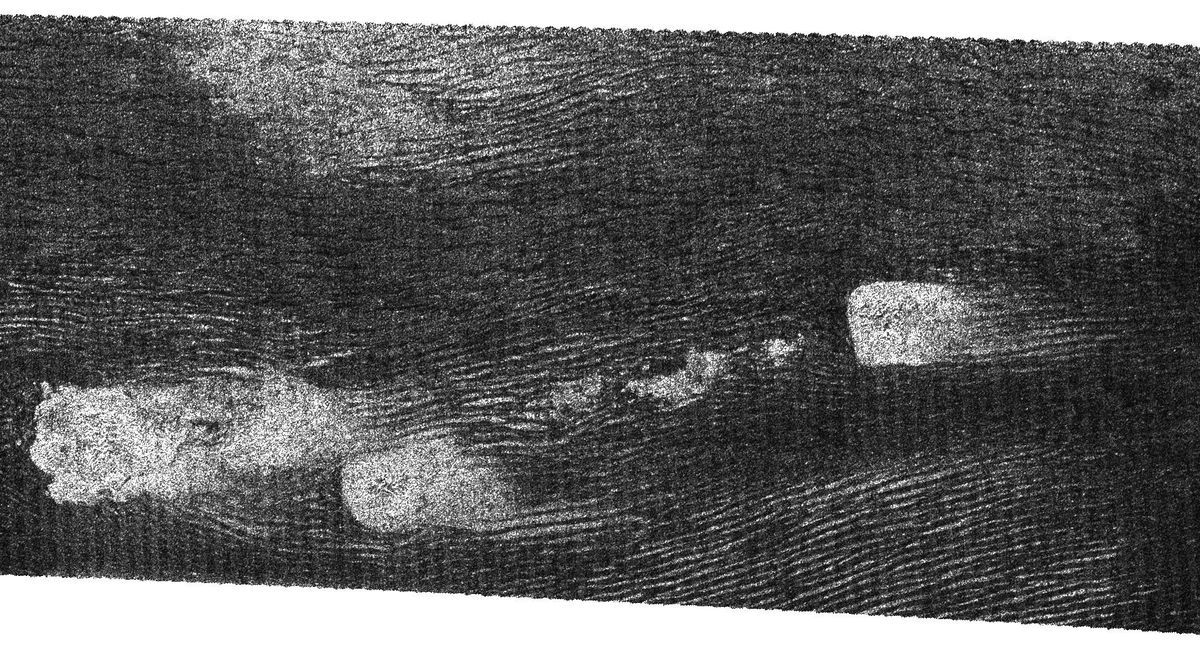
That compare is in step with laboratory experiments impressed by a abnormal quirk scientists have noticed about sprawling dune fields on Saturn’s moon Titan. These dunes are elephantine of compounds called polycyclic fragrant hydrocarbons which have ring-admire structures. On Titan, the dunes stockpile a critical share of the moon’s carbon. And because that moon is one in every of astrobiologists’ most tempting quarries for perhaps finding existence past Earth, carbon matters.
“These dunes are reasonably neat,” win out about senior author Ralf Kaiser, a chemist on the University of Hawaii at Manoa, told Location.com, nearly as mountainous because the Wide Pyramid in Egypt, he added. “In snarl so that you can model the carbon and hydrocarbon cycle and the processes of hydrocarbons on Titan, it is truly crucial to model, after all, the keep the dominant supply of carbon comes from.”
Linked: Saturn’s Moon Titan Would perhaps neutral Own ‘Phantom Lakes’ and Caves
On Titan, there is a straightforward mechanism that scientists know likely builds polycyclic fragrant hydrocarbons: These neat molecules can produce in the moon’s thick atmosphere and still down to the bottom. However the identical family of compounds has been chanced on on loads of worlds that boast no such atmosphere, admire the dwarf planets Pluto and Ceres and the Kuiper Belt object Makemake.
Kaiser and his colleagues desired to identify how polycyclic fragrant hydrocarbons might well perhaps also advance to exist on a world missing an environment to originate them. And when the researchers checked out Titan, they noticed a clue: The keep the dunes are, there are no longer many hydrocarbon ices that are otherwise reasonably fashioned on that moon.
The researchers wondered whether or no longer a second route of, one taking space on the bottom, might well perhaps also turn ices admire acetylene into polycyclic fragrant hydrocarbons. Specifically, the scientists belief the offender might well perhaps also very well be galactic cosmic rays, energetic particles that ricochet across space.
So the researchers designed an experiment: Fetch some acetylene ice, uncover it to a route of that imitates galactic cosmic rays, and ogle what occurs. They mimicked the win of 100 years’ worth of pummeling from these particles, then measured the amounts of various compounds that had formed.
The scientists chanced on several various flavors of polycyclic fragrant hydrocarbons. This suggested to the crew that the interaction between hydrocarbon ices and galactic cosmic rays might well perhaps also certainly gift the occurrence of the compounds even the keep no atmosphere can produce them.
“That is a pretty versatile route of which could happen anywhere,” Kaiser said. That entails no longer neutral correct Titan, but additionally other moons and asteroids, but even grains of interstellar mud and neighboring order voltaic systems, he said.
Subsequent, he and his colleagues wish to pin down what explicit route of is inflicting the transformation, Kaiser said. That shall be hard, he said, for the explanation that ionizing radiation the crew venerable to simulate cosmic galactic rays entails a few simultaneous processes.
The line of compare is spirited aesthetically besides to scientifically, Michael Malaska, who reports planetary ices at NASA’s Jet Propulsion Laboratory in California and who wasn’t serious about the recent compare, told Location.com in an electronic mail. “Their work additional helps that some of Titan’s sand might well perhaps also glow reasonably colours below UV light,” he wrote.
The compare used to be described in a paper printed the day earlier than this day (Oct. 16) in the journal science Advances.
- Touchdown on Titan: Photos from Huygens Probe on Saturn Moon
- Propelling Exploration: Drones Are Going Interplanetary
- Extraordinary Photos: Titan, Saturn’s Largest Moon
Editor’s indicate: This story used to be updated to encompass a observation from Michael Malaska. Electronic mail Meghan Bartels at mbartels@space.com or observe her @meghanbartels. Notice us on Twitter @Spacedotcom and on Fb.




Leave a comment
Sign in to post your comment or sign-up if you don't have any account.