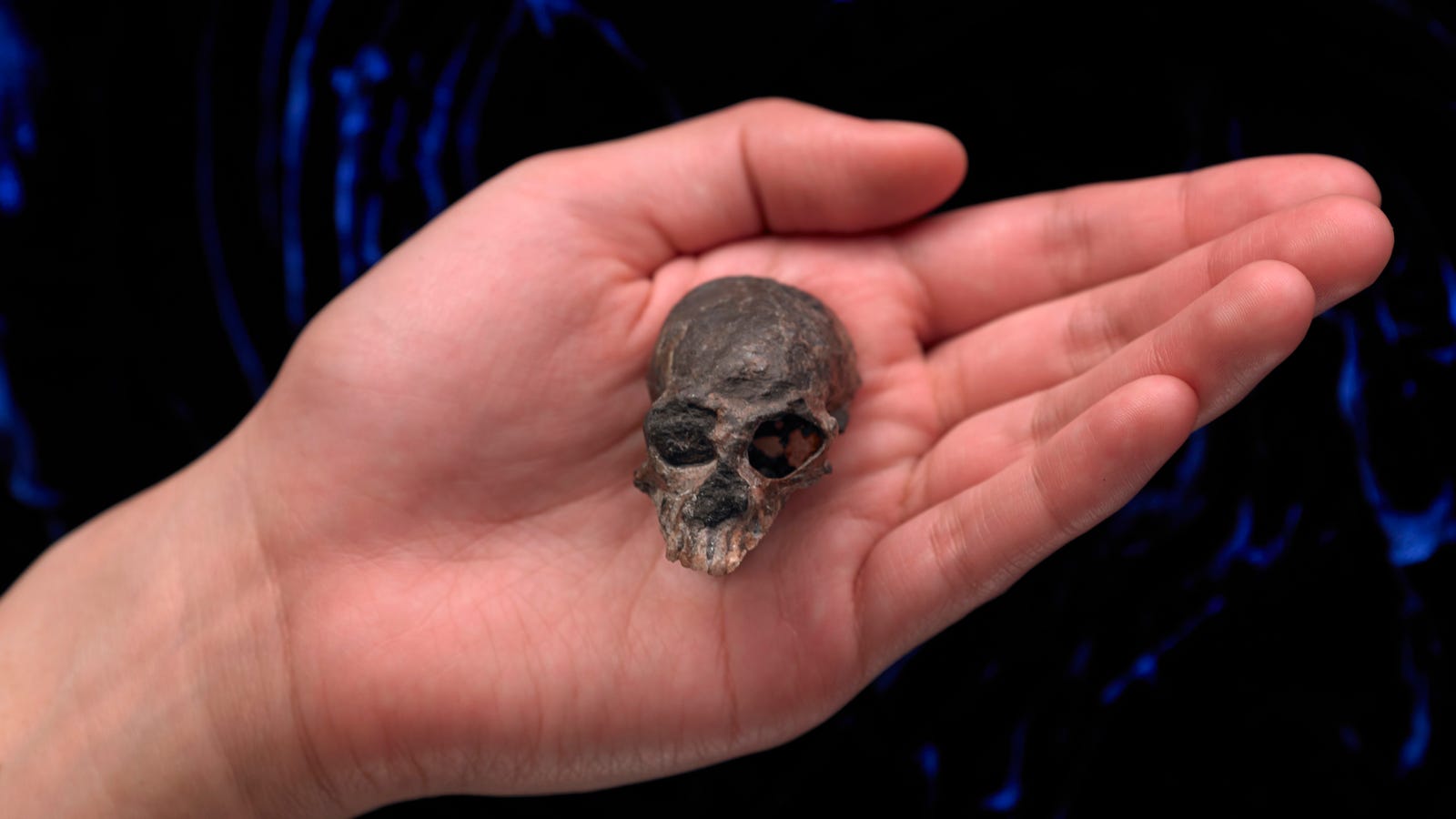
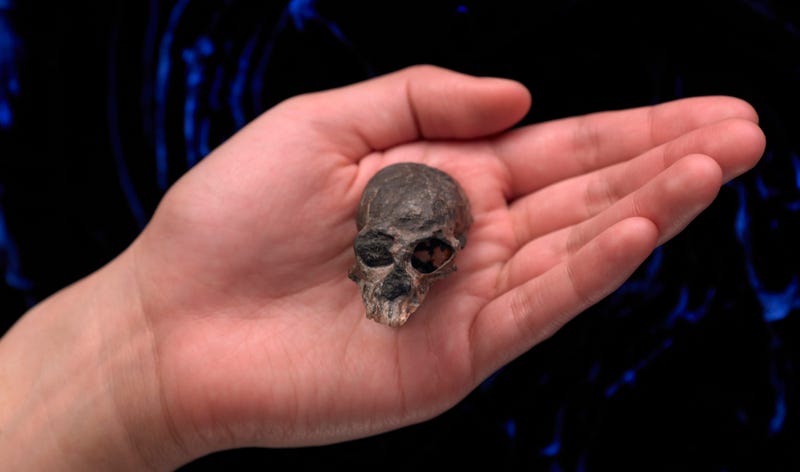
Paleontologists working CT scanners enjoy printed the enchancment of a 20-million-yr-historic primate mind, thanks to an extremely successfully-preserved fossil cranium.
Thought the evolution of our wildly complex human brains isn’t easy, and there aren’t mature brains upright sitting around within the dirt to study with. As one more, researchers must perceive come what may for proof of mind shapes, basically based mostly on the manner brains fade imprints on skulls. That’s what makes this finding spirited—it’s a leer into what primate brains were be pleased prolonged ahead of alternative folks developed.
“It’s beautiful worthy,” John Flynn, belief to be one of many view’s authors and curator of fossil mammals on the American Museum of Pure History in Fresh York, told Gizmodo. “We were looking to convince ourselves it became as soon as anything else nonetheless a primate, alternatively it confirmed a bulbous station where the mind may doubtless quiet be… The cleaning and subsequent CT scan prognosis all reinforced that and the finding’s significance.”
The anthropoid division of the evolutionary tree is damaged into two groups: the Fresh World monkeys, known as the platyrrhines, and the Extinct World monkeys and colossal apes (alongside with other folks), known as the catarrhines. Scientists mediate the split took command not not up to 36 million years within the past. The fossil cranium studied here belongs to belief to be one of many preserved early platyrrhines known as Chilecebus carrascoensis, perhaps belief to be one of many principal platyrrhines to diverge from the team’s fashioned ancestor, per the paper printed in Science Advances. The creature would had been identical in size to a popular tamarin or marmoset, nonetheless with a smaller mind.
The researchers, led by Xijun Ni on the Chinese Academy of Sciences, measured the fossil with excessive-vitality X-rays, allowing them to distinguish between bone and rock within the sample. They mix the scans right into a 3D picture, showing the enchancment of the mind imprinted on the fossilized bone. They estimated that this kind of mind would weigh around 8 grams. They were additionally ready to estimate the scale of the monkey’s olfactory bulb (the situation of the mind accountable for processing smells) and shape of the optic canal and optic nerve. The mind additionally already had some surprisingly disturbing folding, Flynn acknowledged.
C. carrascoensis’ mind proportions provide perception into the historical previous of mind evolution and primates. The olfactory bulb became as soon as surprisingly small, nonetheless wasn’t matched by extra complex or greater optical substances to salvage up for it. This tells the researchers that primate brains doubtless don’t evolve as an total unit, nonetheless changes happen piecemeal.
Though that is an spirited specimen, we’re quiet speaking about one thing hundreds of hundreds of years historic and badly weathered over time. This may doubtless take extra fossils from extra species in uncover to attain the general picture. Even so, these mind case scans are considerable instruments in reconstructing the primate family tree previous what mind scans of residing monkeys can provide. Fresh scans be pleased the one presented here can report us what capabilities were misplaced to evolution, which ones procure from a fashioned ancestor, and which ones developed independently amongst different groups. As an instance, newer platyrrhines be pleased marmosets and tamarins appear to enjoy less mind folding than C. carrascoensis, acknowledged Flynn.
The team hopes to proceed inspecting the enchancment of this mind case in greater resolution.




Leave a comment
Sign in to post your comment or sign-up if you don't have any account.