

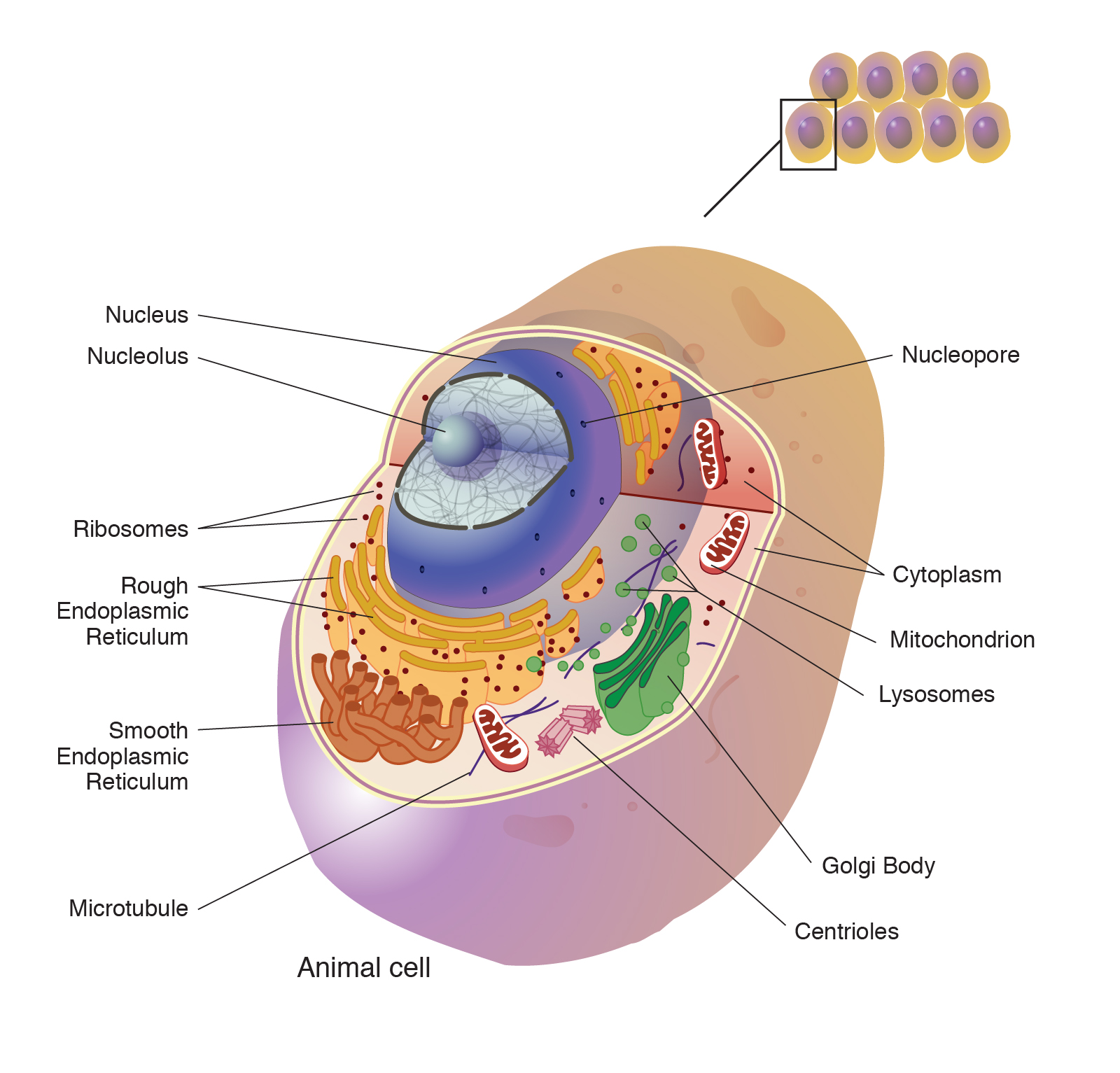
Win bigger / A eukaryotic cell has deal of advanced structure that micro organism and archaea lack.
The cells of all animals, vegetation, and fungi salvage an impressive complexity, with a vary of compartments actually professional in varied obligations, love generating vitality, digesting proteins, or conserving DNA. Even as you stare at micro organism or archaea, nonetheless, their interiors are actually featureless. How did this cell complexity advance about?
A key element that has small our thought here is that we salvage never gotten a strategy of what the ancestors of advanced cells seemed love. Over the closing several years, we salvage found increasing genetic evidence of the existence of novel descendants of these organisms, nonetheless we salvage never been in a blueprint to develop them to salvage a seek at them. On Tuesday, nonetheless, a paper experiences on the success of a decade-long strive to derive one in every of these to outlive in culture. And the resulting microbes stare very unfamiliar—nonetheless unfamiliar in a manner that hints at how advanced cells evolved.
Welcome to Asgard
Advanced cells, known as eukaryotes, elevate a aggregate of three forms of genes. Some advance from the micro organism that had been integrated as mitochondria and chloroplasts. Others appear to salvage evolved after the initiating effect apart of advanced cells. And yet others appear to salvage originated in archaea, a obvious form of easy, single-celled organisms that had been once categorised as micro organism. This equipped key toughen to the hypothesis that advanced cells originated when archaea in a technique swallowed micro organism and commenced the utilization of them to salvage vitality.
A careful comparison of the genes value in eukaryotes to micro organism, along with a consideration of the mitochondria’s metabolism, has pointed to a particular form of micro organism as the ancestor of the mitochondria. A an identical form of diagnosis of the archaeal gene contribution, nonetheless, wasn’t somewhat as definitive. Though it identified a few branches of archaea as comparatively conclude to eukaryotes, the match wasn’t especially true.
That scenario changed with the appearance of sizable-scale DNA sequencing, which enabled us to begin taking a seek on the DNA of organisms that couldn’t in another case be grown in sufficient quantities to symbolize. In 2010, sequencing of environmental samples revealed the existence of the Asgard archaea (in conjunction with Lokiarchaeota, Thorarchaeota, Odinarchaeota, and Heimdallarchaeota). In conserving with the genome reconstructions, these organisms appear to salvage relatives of some genes that had supreme been viewed previously in eukaryotes and are extinct for organizing the internal of cells. Varied be taught of their DNA placed them as eukaryotes’ closest dwelling relatives—actually, all eukaryotes can also merely furthermore be thought of as a single branch of the Asgard archaea.
There became factual one declare: we had no arrangement what they seemed love. Which manner we couldn’t per chance determine what these genes had been doing internal their cells. It be that you simply per chance can also place confidence in that the Asgard archaea had already evolved some stage of complexity sooner than swallowing micro organism. At the identical time, because we couldn’t definitively listing that these genes got here from an archaeal cell, questions had been raised about whether Asgard archaea actually existed and had the genes we thought they had.
Endurance became a virtue
Assuming it holds as much as search assessment, a paper posted on the bioRxiv on Tuesday have to nonetheless cease the debate. A community in Japan has finally cultivated a stress of Lokiarchaeota it is calling Candidatus Prometheoarchaeum syntrophicum stress MK-D1 (we will factual be informal about it and skedaddle with MK-D1). Allotment of the narrative is what this tells us in regards to the initiating effect apart of advanced cells. But another section is the outstanding patience the researchers demonstrated in getting this work accomplished.
It began with a pattern of the forms of sediments the effect apart Asgard archaea had been found previously, placed in a bioreactor that persisted to feed its contents the nutrients value in the sediment. This became allowed to bustle for over 5 years sooner than the researchers started taking samples out of it and looking out for to develop person microbial lines. They did this by sealing small samples from the bioreactor in glass tubes with some minimal nutrients and permitting them to take a seat down at room temperature. Amazingly, they didn’t quit as the months rolled by and nothing grew. It took a total one year for one in every of the tubes to listing in all probability the most faint cloudiness introduced about by microbial increase.
Several rounds of regrowth and purification adopted, each of which took about three months for increase to derive going (the crew estimates that the microbes need two to some weeks to attain a single cell division). Eventually, the researchers had been left with a culture that had factual a single bacterial species and MK-D1 rising in it, nonetheless the technique took a dozen years—longer than we may per chance well well known that Asgard archaea existed.
The micro organism and MK-D1 grew together because they it sounds as if had a symbiotic relationship of forms. MK-D1 became in a blueprint to interrupt down a bunch of assorted amino acids to salvage vitality, and it produced hydrogen as a byproduct. But permitting hydrogen to amass introduced about this metabolism to decelerate dramatically, so the archaeal cells would hand off the hydrogen to the micro organism, which consumed that as gas.
Building complexity
That tight affiliation affords an glaring route to internalizing the micro organism and generating mitochondria. There became factual one small declare with the hypothesis: the MK-D1 cells had been actually small; they didn’t seem like able to doing anything else love swallowing micro organism. Genuinely, the cells had no detectable internal structure the least bit, making the hypothesis that the Asgard archaea had been advanced before forming eukaryotes unlikely.
What they did salvage, nonetheless, became external complexity. Beneath some instances, the cells would derive hundreds membrane protrusions that jutted out from their surface. Beneath others, they would stretch out long filaments that fashioned advanced branching patterns. Thus, somewhat than constructing structures at some level of the cells, it appears to be like lots of the genes shared by us and MK-D1 are extinct to put together their membranes to derive external structures.

Win bigger / Some pictures of the bizarre membrane structures fashioned by these cells.
The be taught crew suggests that these protrusions most regularly have interaction with the symbiotic micro organism, increasing the power to shuttle hydrogen out of cells and salvage it metabolized away. And, the researchers argue, this affords a obvious mannequin for how advanced cells got here about. By continuing to account for these contacts, a cell love MK-D1 can also finally engulf its bacterial accomplice. And may per chance well well merely the technique proceed in an uncontrolled manner, it is going to also doubtlessly swallow the archaeal cell itself, which may per chance per chance well listing how the cells’ genetic cloth ended up encased in a obvious membrane compartment.
Whereas there are nonetheless some hypotheticals to this mannequin, it does listing two of the supreme aspects of eukaryotic cells. And despite the fact that the mannequin needs revision, the power to cultivate Asgard archaea has already answered two of essentially the most serious questions about them: they’re accurate, and so they don’t appear to salvage any internal complexity. The following important step will be to grab a seek at to shift these cells support to something love a sterile model of their native environment to ascertain the bizarre aspects of MK-D1 are its standard suppose and now not factual a response to the culture conditions.
bioRxiv. Abstract number: 10.1101/726976v1 (About the arXiv).




Leave a comment
Sign in to post your comment or sign-up if you don't have any account.